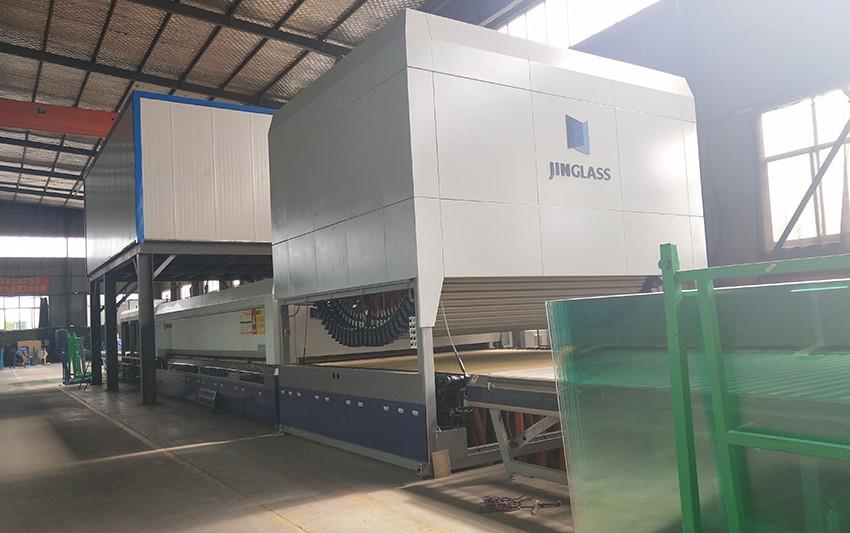
Several stages for tempered glass manufacturing
Sep 20, 2017
Leave a message
Tempered glass is to heat the glass near the softening temperature (in this case, it is in a viscous flow state) - this temperature range is called the tempering temperature range (620 ° C - 640 ° C), it is kept for a certain time, then quenched, below Briefly describe the temperature change and stress formation process of tempered glass during heating and quenching.
a. Start the heating phase:
The glass piece is heated into the tempering furnace from room temperature. Since the glass is a poor conductor of heat, the inner layer temperature is low, the outer layer temperature is high, the outer layer begins to swell, and the inner layer is not expanded, so the outer layer is expanded by the inner layer. The suppression surface produces temporary compressive stress, and the central layer is tensile stress. Due to the high compression resistance of the glass, although the glass is not heated, the glass piece is not broken. Note: From here, it can be understood that the glass enters the furnace, due to the inside and outside of the glass. The temperature difference caused by the layer, the stress of the inner and outer layers of the glass, so the thick glass should be heated slowly and the temperature is lower, otherwise the glass will break in the furnace due to the temperature difference between the inside and the outside.
b. Continue the heating phase:
The glass continues to be heated, and the temperature difference between the inner and outer layers of the glass is reduced, and the inner and outer layers reach the tempering temperature and the stress in the glass plate.
c. Start the quenching phase (1.5-2 seconds before starting the blowing)
The glass piece is blown into the wind grid by the tempering furnace. The surface layer temperature drops below the center temperature, the surface begins to shrink, and the center layer does not shrink. Therefore, the shrinkage of the surface layer is suppressed by the center layer, and the surface layer is temporarily tensilely stressed. Forming compressive stress.
d. Continue the quenching phase:
The inner and outer layers of the glass are further quenched, the surface layer of the glass is hardened (the temperature has dropped below 500 ° C), the shrinkage is stopped, and the inner layer begins to cool and shrink, and the hardened surface layer inhibits the shrinkage of the inner layer, resulting in The surface layer generates compressive stress and the tensile stress is formed in the inner layer.
e. Continue to cool (within 12 seconds)
The temperature of the inner and outer layers of the glass is further reduced. The inner glass drops to about 500 °C at this time, and the shrinkage accelerates. At this stage, the compressive stress of the outer layer and the tensile stress of the inner layer are basically formed, but the center layer is still relatively soft and not completely It is out of the viscous flow state, so it is not a complete stress state.
f. Finished tempering (within 20 seconds)
At this stage, the outer glass is completely tempered, the temperature difference between the inner and outer layers is reduced, and the stress of the tempered glass is formed, that is, the outer surface is compressive stress and the inner layer is tensile stress.
Every phase can effect the tempered glass quality. Joysun is the experienced tempered glass factory for many years and have earned good reputation all over the world. Believe it is your best choice.